
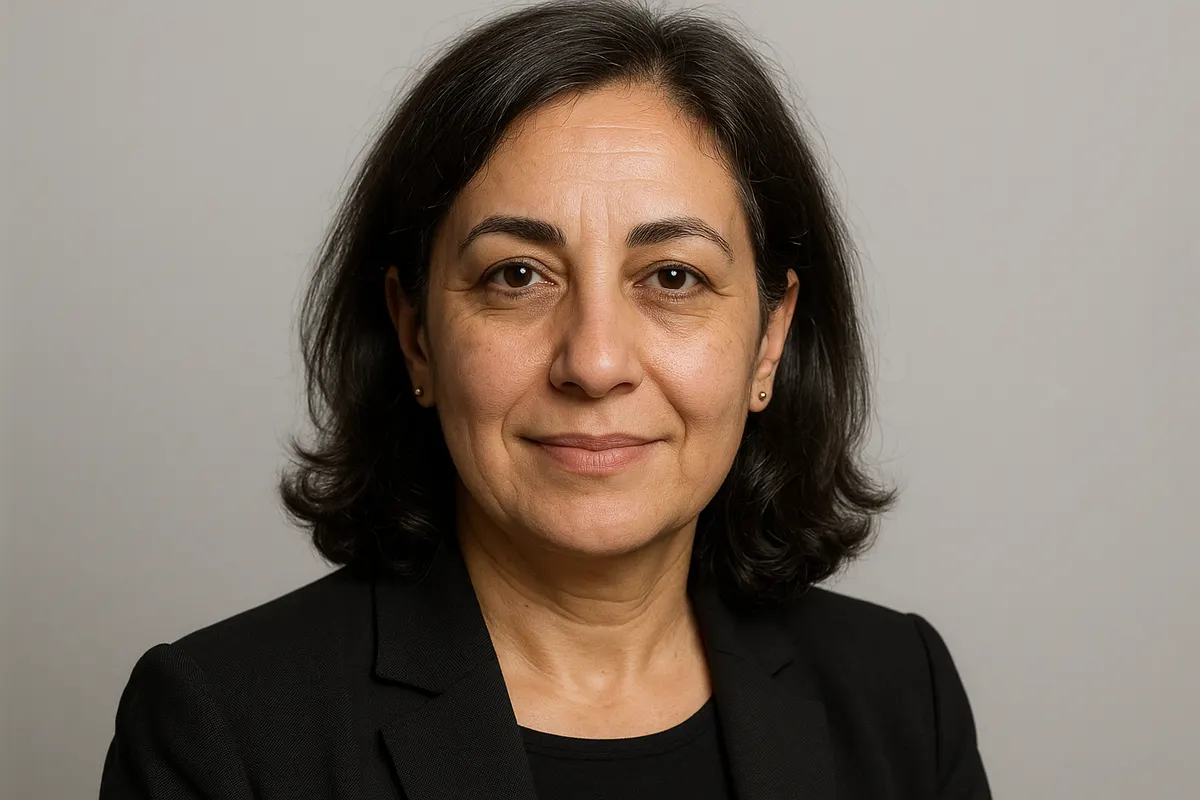

What happened: a regulator calls for an international investigative service
The chair of the Dutch gambling regulator Kansspelautoriteit, Michel Groothuizen, has publicly argued that national watchdogs can no longer run an effective illegal gambling crackdown on their own, and has called for the creation of an international investigative service to go after unlicensed operators. His core point is blunt: the black market is organised across borders, while enforcement is still stuck inside them.
That asymmetry is the whole story. A regulator in one country can fine a company, order internet service providers to block a domain, or push payment providers to cut off transfers. What it usually cannot do is follow the money into a third jurisdiction, identify who actually owns a shell company registered somewhere else, or compel a foreign hosting provider to cooperate. Illegal operators know this. They register in permissive jurisdictions, route payments through intermediaries, and spin up mirror domains faster than blocking orders can be issued.
Groothuizen’s proposal is for something closer to a shared investigative capability — a body that can build cases across multiple countries at once, rather than a dozen regulators each chasing the same operator with a fraction of the evidence. The Kansspelautoriteit publishes its enforcement positions and decisions on its own site (kansspelautoriteit.nl), which is the primary place to track how this develops.
Why it matters
Cross-border cooperation in gambling has existed for years, but mostly as talking shops and information sharing. Groups like the International Association of Gaming Regulators and the Gaming Regulators European Forum let regulators compare notes and coordinate positions. Financial crime bodies, including the Financial Action Task Force, have repeatedly flagged gambling as a laundering channel. Interpol has run coordinated operations against illegal sports betting networks in Asia. What has been missing is a permanent unit with the mandate and resources to investigate operators the way a financial crime agency investigates a fraud ring.
Three things make this more than a bureaucratic reshuffle.
The black market is not small. In several regulated European markets, a meaningful share of online play still goes through unlicensed sites, and the gap tends to widen when regulated operators are loaded with restrictions the black market simply ignores — deposit limits, advertising bans, affordability checks, stake caps. Every unlicensed site that stays reachable is a live argument against the regulated model.
Illegal betting enforcement is now a financial crime problem. Unlicensed gambling sits next to payment fraud, money mule networks, match-fixing and laundering. That’s why the proposal is framed as an investigative service rather than a licensing committee. The skills needed are forensic accounting and cross-jurisdiction subpoenas, not rulebook drafting.
Players carry the risk. When an unlicensed site withholds a withdrawal, changes bonus terms retroactively, or vanishes with balances, there is no regulator to appeal to. There is no dispute process, no ring-fenced player funds requirement, and no obligation to use independently tested games. International gambling regulation with real investigative teeth is, ultimately, consumer protection infrastructure.
The honest caveat: this is a call, not a law. Creating a cross-border investigative body means agreeing on funding, legal powers, data-sharing rules and which jurisdictions participate. Those negotiations take years, and several countries with large licensing industries have little incentive to volunteer their registrants for scrutiny.
What it means for Indian readers
India is on the receiving end of exactly the problem Groothuizen describes, only with a more complicated legal backdrop. Gambling has historically been a state subject under the Public Gambling Act, 1867 and state-level laws, which produced a patchwork: some states permit certain activities, others ban them outright, and enforcement varies. On top of that, the Promotion and Regulation of Online Gaming Act, 2025 moved central policy firmly against online real-money gaming, while the Ministry of Electronics and IT has powers to block sites it deems unlawful. Tax rules add another layer, with TDS on net winnings from online gaming and GST treatment that has been repeatedly litigated.
The practical upshot for an Indian reader is that the legal position is restrictive and still shifting, and that a large number of sites marketing themselves to Indian players hold licences issued far away — Curaçao, Malta, the Isle of Man, Anjouan and others — with no accountability to any Indian authority. That matters more than most players realise. A Curaçao or Anjouan licence tells you a company paid a fee somewhere; it rarely tells you a regulator will take your complaint seriously, freeze operator funds, or audit segregation of player balances.
If an international investigative service ever does materialise, it would most likely affect Indian players in three indirect ways: more domain blocks and payment friction on offshore sites, faster identification of operators that share ownership across dozens of brands, and more pressure on the shell-licence jurisdictions that currently absorb the complaints nobody else will handle. None of that happens next quarter.
Until then, the difference between a properly licensed operator and an offshore one is the difference between having recourse and having none. Here is what actually changes for you, dimension by dimension.
| What you rely on | Site licensed by a strong regulator | Unlicensed or shell-licensed offshore site |
|---|---|---|
| Withdrawal disputes | Formal complaints process, regulator or ADR body can intervene | Email support only; no external body with real authority |
| Player funds | Often required to be segregated from operating funds | Usually no segregation requirement or disclosure |
| Game fairness | RNG and RTP tested by accredited labs; published RTP | Testing claims may be unverifiable; RTP can be configurable |
| KYC and account security | Mandatory identity checks, AML monitoring | Loose or absent checks, which cuts both ways for you |
| Responsible gambling tools | Deposit, loss and session limits, cool-off, self-exclusion | Tools may be missing, hidden, or reversible on request |
| Bonus terms | Terms must be clear and enforceable; wagering disclosed | Terms can be vague, changed, or used to void withdrawals |
The black market gambling pitch is always the same: bigger bonuses, no checks, no limits. Read that list again and you’ll see why. Those “advantages” exist precisely because nobody is supervising the operator, which is also why there is no one to call when a ₹40,000 withdrawal sits “under review” for six weeks.
Key takeaways
- The chair of the Netherlands’ Kansspelautoriteit has called for an international investigative service, arguing that national regulators are outmatched by cross-border illegal operators.
- It is a proposal, not policy. Expect years of negotiation over powers, funding and participating jurisdictions before anything operational exists.
- Illegal gambling enforcement is increasingly a financial crime exercise — ownership structures, payment routing, laundering — not just domain blocking.
- Offshore casino risks are concrete: no dispute recourse, no fund segregation guarantees, unverifiable game testing, and bonus terms that can be used against you.
- For Indian readers, the legal position on online real-money gaming is restrictive and changing. Check the current central and state rules that apply to you before you play anything, and treat marketing claims about “licences” sceptically.
- A licence is only as good as the regulator behind it. Ask what body issued it, whether that body publishes enforcement actions, and whether it accepts player complaints.
- Whatever the jurisdiction, the house edge never goes away. A 96% RTP slot returns roughly ₹96 per ₹100 wagered across millions of spins on average — that is a long-run figure, not a session forecast.
FAQ
Is an international illegal-gambling task force actually being created?
Not yet. A senior regulator has called for one. Building a cross-border investigative body requires legal powers, funding and agreement among jurisdictions, and no such agreement has been reached.
Would a global crackdown make offshore sites disappear?
Realistically, no. Coordinated enforcement raises costs, disrupts payments and takes down some networks, but unlicensed operators rebrand and re-domain quickly. The likelier outcome is steadier pressure rather than elimination.
How do I check whether a site is properly licensed?
Find the licence number in the site footer and verify it on the issuing regulator’s own public register, not on the operator’s page. If the regulator has no searchable register, no published enforcement decisions and no complaints channel, treat the licence as decoration.
Gambling carries a built-in mathematical advantage for the operator, and over time most players lose money. It is adult entertainment, never a source of income. Know and follow the laws that apply where you live. If gambling is causing you financial or emotional harm, use deposit and loss limits, self-exclusion tools, or contact a local support service.